 By Matt
• Buying Guides
• Published 24 Mar 2024 • Updated 17 July 2026
By Matt
• Buying Guides
• Published 24 Mar 2024 • Updated 17 July 2026
Musician Deep Dive: Pino Palladino
Before you start reading, just letting you know that my site contains affiliate links, at no extra cost to you, but they may give me a small commission to help run the site. Feel free to get extra info on my disclaimers page. Thanks and on with the show...
I first came across Pino Palladino while I was completely engrossed in a “little” side project from John Mayer called the John Mayer Trio.
I had bought the live album Try! after hearing a few tracks and became pretty obsessed with it. At the time I was mostly interested in what John Mayer was doing on guitar but the more I listened, the more I found myself focusing on the rhythm section.
I played that album to death.
Actually, I probably still do.
The bass playing was one of the main things that kept pulling me back in. It was incredibly tight but never sounded like it was stuck underneath the guitar. Sometimes Pino would sit back and hold everything together and then suddenly play a small run that became the most interesting part of the song.
This obviously led me to start looking him up.
That was when I discovered that Pino Palladino had played with just about everyone. Paul Young, D’Angelo, The Who, Nine Inch Nails, Gary Numan, Adele, Ed Sheeran, Eric Clapton and the list just keeps going.
How had I not heard of this guy?
Well, I probably had heard him hundreds of times.
I just didn’t know it was him.
That is really what made me want to write this post. I wanted to look into who Pino Palladino is, why his bass playing is held in such high regard and what gives him that really warm and relaxed sound.
I have also picked five pieces of gear at completely different prices that can help you move towards some of his tones.
Some of the products have a direct connection to Pino.
Others are more realistic alternatives that use the same type of bass, amp or effect without costing the price of a small car.
Just to be clear before we get into it — none of this gear will magically make us play like Pino.
Unfortunately, Amazon still does not sell his timing or feel.
But there are still a few things we can copy from his setup.
Who Is Pino Palladino?
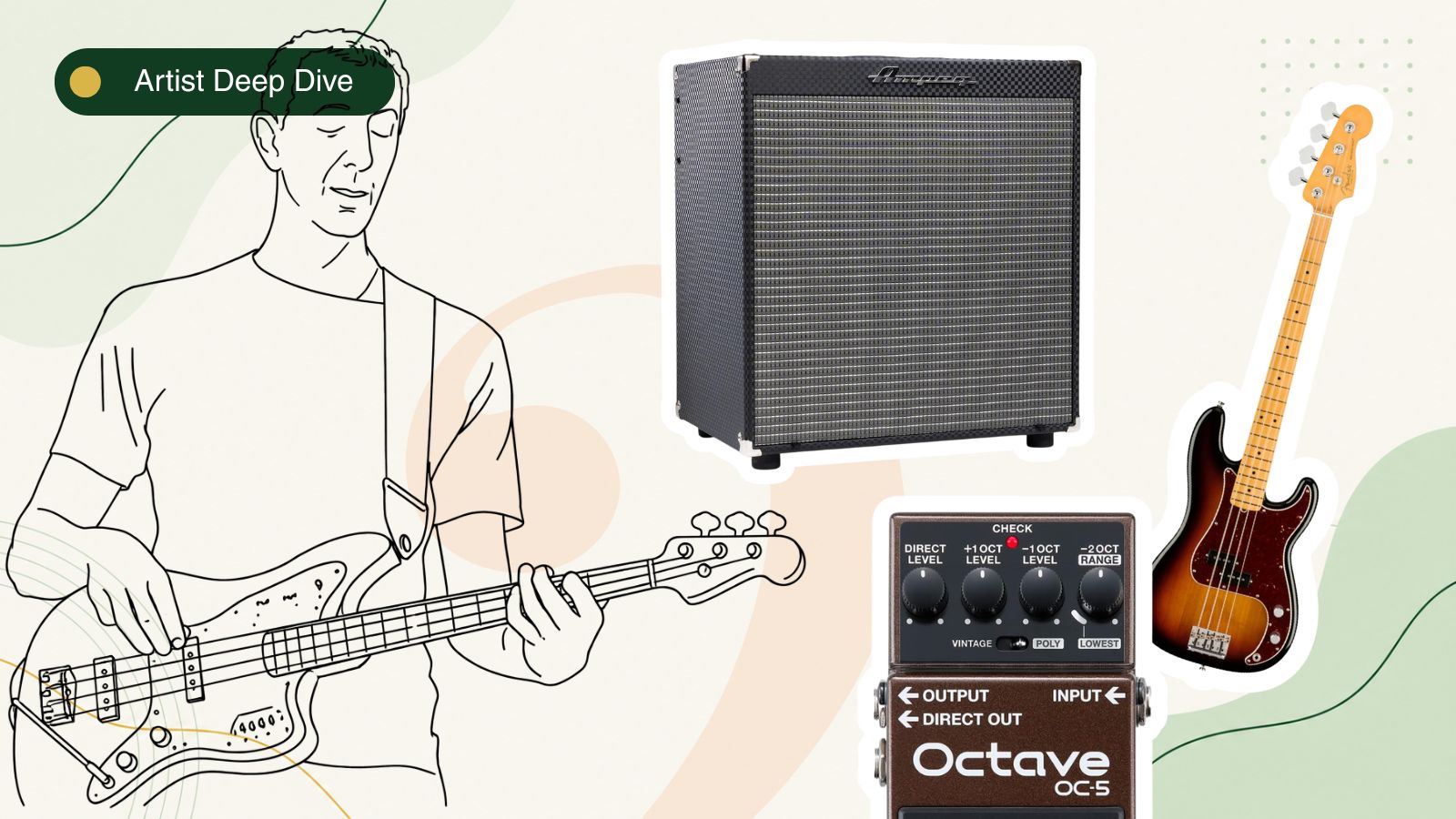
Pino Palladino was born in Cardiff, Wales in 1957 and first started out playing guitar. He changed over to bass while he was still young and began working professionally around the end of the 1970s.
His early career became strongly linked with a fretless Music Man StingRay bass, a 19979 model he purchased sometime in 1980. He soon started using it on records, defining his original unique sound which appealed to many who heard it. The instrument was active, punchy and sounded very different from the Precision Bass tone he would become known for later.
A lot of people first noticed him on Paul Young’s version of “Wherever I Lay My Hat (That’s My Home)”. Listen to the beginning and you will hear that the bass is not really acting like a normal bass part. It starts the song, moves around the vocal and keeps sliding into notes that sound almost sung rather than played. That bass line didn't just fill out the bottom end - It became the hook.
Through out the 80's and 90's, Pino's reputation grew and grew becoming a renowned and in demand session player. His ability to play in any genre was an obvious advantage to him and any producer that managed to lock him down to play on a song. In this period his melodic bass parts can be heard with Don Henley’s, Gary Numan, Tears for Fears, Jeff Beck, David Gilmour and Phil Collins.
In the 2000's he became a central figure in the Neo-Soul scene, first working with D'Angelo and also with people like Erykah Badu, Common and Bilal - helping to define the sound of the genre.
In 2006, Pino stepped into the shoes of John Entwistle after he passed, taking on the bass playing duties for the Who. Around this time he became a member of the John Mayer Trio producing one of my favourite self titled live albums that I still listen to today.
Pino Pallidino has appeared on more then 600 recordings and is still going - what an amazing feat. He is still today a highly respected and regarded bass player. In a world where bass players - and session musicians - don't get as much credit as deserved, I am hoping that this little blog post helps open peoples eyes.
What Makes Pino Palladino’s Bass Playing So Good?
Pino Palladino’s bass playing stands out because he effortlessly mixes his technical mastery with a musical, melodic, expressive way of playing that other players can't match.
Melodic phrasing
He treats bass lines like vocal melodies, adding emotion without overdoing it or cluttering the empty space.
A Fretless Master
His playing the fretless bass introduced us to a singing, fluid tone which helped to create a defining 1980s sound.
In the Pocket
He locks into the groove with a pulse and timing that you can't help to bounce along to.
Genre Versatility
A master of a large range of styles and genres - he seems at home in rock, pop, funk, jazz and neo‑soul without losing a sense of who he is as a player.
Tasteful and Restraint
This is a hard thing to teach and Pino has it naturally - He knows when not to play which leaves space that tightens the whole song.
Tone
His tone is defined with a warm, expressive and recognizable feeling no matter what bass he is playing.
Inventive
Not afraid to try things, he can add harmonic movement that will lift songs without diverting attentions - just adding to it.
Adaptive
He has the ability to adapt to what an artist needs while still providing those memorable lines we love.
All of the above points show off the qualities that make Pino, Pino. He is one of the most respected and influential bassists of the last 40 years.
What Bass and Gear Does Pino Palladino Use?
There are two bass guitars that come up again and again when looking at Pino Palladino’s gear. The Music Man StingRay and the Fender Precision Bass.
His fretless Music Man StingRay is the instrument behind a lot of his best-known 1980s work. It has one large humbucking pickup and an active preamp. That helped produce the clear and powerful fretless tone you hear on a lot of those recordings.
Music Man’s current Pino Palladino Signature StingRay is based on his original 1979 fretless bass. The standard signature version copies the important parts of the original setup including the pickup and two-band preamp. Music Man also released 15 Icon Series basses which copied the finish wear and other small details from Pino’s actual instrument.
I expect those will remain well outside my budget.
The other side of Pino’s sound comes from the Fender Precision Bass. He has used a number of old P-Basses including instruments from 1961 and 1963. Fender did not simply pick one and copy it for his Custom Shop model. They combined the things Pino liked from both.
The finished signature bass has a Fiesta Red body, rosewood fingerboard, single split-coil pickup and the standard volume and tone controls. It is a beautiful bass. It is also extremely expensive.
Thankfully, the basic Precision Bass design is available across the Fender and Squier ranges. You do not need his exact Custom Shop bass to try this type of sound. A P-Bass has one split-coil pickup, one volume knob and one tone knob. That’s pretty much it.
The strings are another important part. Pino has used flatwound strings for the warmer Precision Bass sounds. In 2025, Ernie Ball released the Pino Palladino Signature Smoothie Flats which were developed directly with him.
These are the clearest product connection in the article because they were made with Pino rather than simply being a similar product from the same brand.
Amplifiers are a little harder to narrow down because the equipment has changed depending on the job. Pino has appeared with Ampeg and Ashdown equipment and has used large touring rigs when the venue required them.
Telling someone at home to buy an SVT and an 8x10 cabinet would be a little silly. Where are you even putting it?
The Ampeg product I have included later is a smaller combo. It is not an amp I am claiming Pino personally uses. It is there because it gives you a way to try a larger and warmer Ampeg sound without buying a touring rig.
The BOSS OC-2 is another well-known part of his early gear. The effect adds a lower octave below the original bass note. With a fretless bass, it helps to create that strange deep sound heard on some of his 1980s work.
The OC-2 has been discontinued but BOSS now makes the OC-5. Its Vintage mode is based on the older single-note octave effect.
Pino’s main sounds are quite different:
His early recordings: fretless StingRay, active sound and octave effects.
A lot of his later playing: Precision Bass, flatwound strings and much less brightness.
How Do You Get a Pino Palladino Bass Tone?
Let’s start with the annoying answer.
You need to work on how you play. I know, much less fun than buying another pedal.
Pino’s sound comes from the way he touches the strings, where he puts the notes and how he reacts to the drummer. You could hand him a fairly basic bass and he would still sound much more like Pino than I would playing his exact Custom Shop Fender.
Gear matters, but it is only part of it.
For the warmer sound, move your picking hand away from the bridge and try playing near the end of the neck. The strings feel looser there and the notes usually have less attack.
Also try using a lighter touch. When I first started playing bass, I thought hitting the strings harder would automatically give me a bigger sound. Sometimes it just gives you more clanking and fret noise.
The amplifier can provide the volume. Your fingers do not need to fight the instrument.
The tone control is worth trying as well. Turn it all the way up, then slowly remove some of the top end. Stop when the bass sounds warmer but the notes can still be heard clearly.
Do not immediately turn all the bass frequencies up on your amp either. That can create a giant muddy mess, especially when playing with a band.
I would put everything around the middle first. Play for a while and only change something when you know what is missing.
Too thin? Try a little more low-midrange. Too much string noise? Bring some of the highest frequencies down. Can’t hear the notes through the drums? Adding more bass might make it worse.
Flatwound strings will make one of the biggest immediate differences. They feel smoother and normally sound darker than roundwounds. You may hate the feel at first, so give them a bit of time.
The fretless sound is another thing entirely because your fingers decide whether the note is in tune. A fretted bass gives you some protection. On a fretless, landing a few millimetres away from the right spot can sound horrible.
The slides and vibrato should come after you can play the notes in tune.
An octave pedal can bring in the deeper part of his early sound, but the normal bass signal should still be easy to hear. If the lower octave takes over completely, the whole thing can become a wall of low-frequency noise.
The best practice is still playing with the recordings. Do not only learn the fret numbers. Listen to when each note starts, when it stops and what the drummer is doing at the same time.
A few songs I would start with are:
“Wherever I Lay My Hat” by Paul Young for the fretless sound
“I’m Gonna Tear Your Playhouse Down” by Paul Young for more fretless phrasing
“Lady” by D’Angelo for timing and space
“Vultures” by John Mayer for a deep but simple groove
“Who Did You Think I Was” by the John Mayer Trio for his blues-rock playing
The notes themselves are only half the job. The feel is the difficult part.
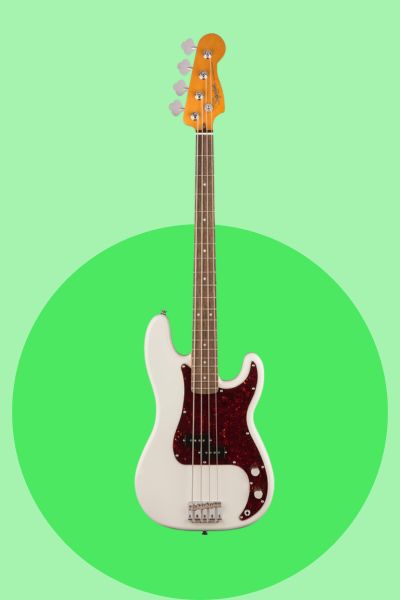
Squier Classic Vibe ’60s Precision Bass
This Squier uses the normal Precision Bass arrangement: one split-coil pickup, a volume knob and a tone knob.
- Vintage design
- Fender split coil pickup
- Simple volume and tone
- Affordable way for P-Bass
Why Is It Great?
A lot of this sound comes from fairly simple ingredients. A Precision-style pickup, flatwound strings and the tone control brought back slightly can get you into the right area. The Squier lets you try that without spending thousands of dollars.
The Pros & Cons of Squier Classic Vibe ’60s Precision Bass
Pros
- Affordable Precision-style bass
- Simple controls
- Traditional P-Bass pickup sound
- Works for soul, blues, rock and pop
- A good base for trying flatwound strings
Cons
- The setup may need adjusting after delivery
- Not the same build quality as an American Fender
- The original roundwound strings may be too bright for this sound
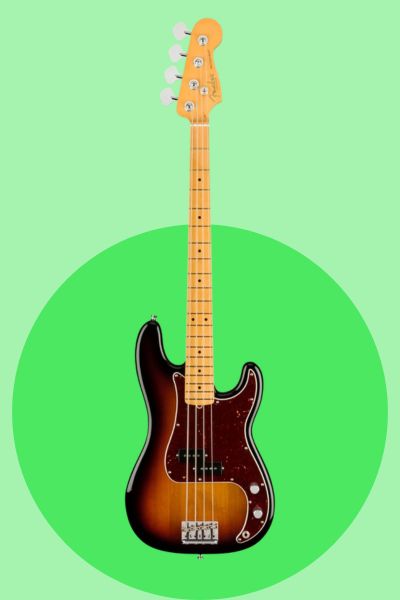
Fender American Professional II Precision Bass
The American Professional II is a current American made Precision Bass. The pickup, neck and smaller design details are different but it still gives you the same basic P-Bass layout.
- American-made
- V-Mod II split coil pickup
- Passive volume and tone controls
- For long term use
Why Is It Great?
This is for someone who already knows they want a Precision Bass and is prepared to spend the extra money. The neck has rolled fingerboard edges and a sculpted heel which should make it more comfortable when you move higher up the fretboard. A good Precision Bass can be used for rock, soul, blues, pop, funk and a lot of other styles.
The Pros & Cons of Fender American Professional II Precision Bass
Pros
- Professional American Fender
- Strong P-Bass sound
- Comfortable neck design
- Simple passive electronics
Cons
- A major price jump from the Squier
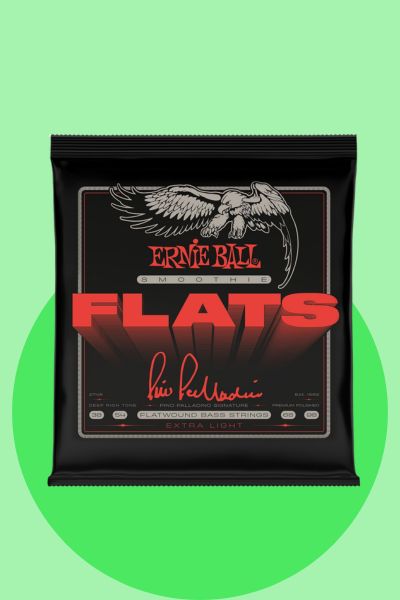
Ernie Ball Pino Palladino Signature Smoothie Flats
The product with the closest actual connection to Pino. These are his signature flatwound strings. Ernie Ball worked with Pino to develop the Smoothie Flats around the feel, tension and sound he wanted.
- Made with Pino Palladino
- Smooth flatwound design
- Warm and rounded tone
- Pino’s signature string gauges
Why Is It Great?
Flatwound strings do not have the same ridges that you can feel on normal roundwounds. You usually get less noise as your fingers move over them and they do not have as much of that new string brightness. If you want to make one change towards Pino’s sound, I would start here.
The Pros & Cons of Ernie Ball Pino Palladino Signature Smoothie Flats
Pros
- Developed with Pino Palladino
- Warm and smooth tone
- Less finger noise
- Can remain on a bass for a long time
Cons
- More expensive than basic
- The feel may take time to adjust to
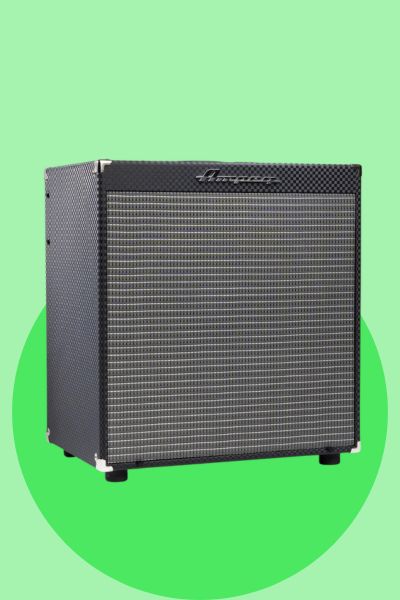
Ampeg Rocket Bass RB-115
Pino has appeared with very large Ampeg systems.
This is not one of those systems.
The RB-115 is a combo with a 15-inch speaker and 200 watts of power. It is still fairly large but at least it can be moved without assembling a road crew.
Your neighbours may also thank you.
Maybe.
- 200 watts
- 15 inch speaker
- Classic Ampeg 3 band EQ
- Built in Super Grit overdrive
Why Is It Great?
A 15-inch speaker can give the bass a full and rounded sound which suits the warmer side of this article. I would start with the overdrive turned off and the EQ in the middle. From there, make small changes. The Ultra Lo switch can add more low end but it may be too much depending on the room. The same applies to the overdrive. It is useful to have but it is not essential for this particular sound. The XLR output is also handy because the amp can be connected to a PA or recording setup.
The Pros & Cons of Ampeg Rocket Bass RB-115
Pros
- Full sound 15-inch speaker
- Familiar Ampeg tone controls
- XLR output for recording
- Smaller than a touring Ampeg setup
Cons
- Still a fairly large combo
- More power than some home players need
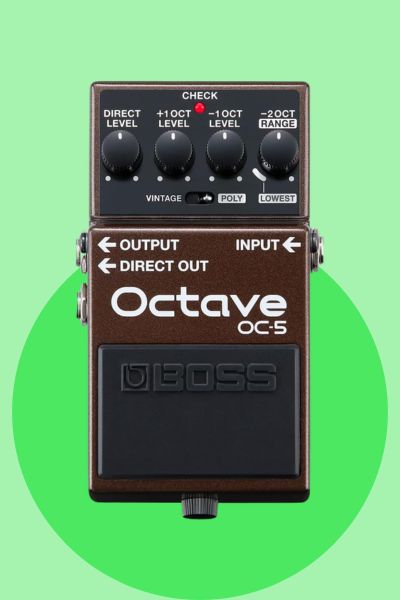
BOSS OC-5 Octave Pedal
Pino’s older fretless setup is often connected with the BOSS OC-2.
That pedal is no longer made so you either need to buy one used or look at the newer OC-5.
The OC-5 includes a Vintage mode based on the older effect and a Poly mode for playing more than one note.
- Vintage and Poly modes
- Designed for bass and guitar
- 1 and 2 octave down controls
- Modern option
Why Is It Great?
An octave pedal puts a lower note underneath what you play. The OC-5 can make a single bass note sound much larger but the controls need a bit of restraint. I would leave plenty of the original bass signal in the mix. Then slowly add the lower octave until it becomes noticeable.
The Pros & Cons of BOSS OC-5 Octave Pedal
Pros
- Easy to find
- Vintage mode
- Better tracking than old octave pedals
- Dedicated bass setting
Cons
- Not an original OC-2
- Can become muddy when the effect is too high
FAQ
What bass does Pino Palladino play?
Pino is most closely connected with his fretless Music Man StingRay and his Fender Precision Basses.
The StingRay is a big part of his early recordings while the Precision Bass appears across a lot of his later soul, rock and blues work.
Both Music Man and Fender make official Pino Palladino signature models.
What strings does Pino Palladino use?
Pino has used flatwound strings for the warmer Precision Bass sounds.
Ernie Ball now makes the Pino Palladino Signature Smoothie Flats which were developed with him to match the feel and tone he wanted.
Flatwounds are one of the easiest things to try if you already have a Precision-style bass but find that it sounds too bright.
How do I get a Pino Palladino bass tone?
How you approach it depends on which part of Pino’s career you are trying to copy. The article above goes into more depth but a quick FAQ answer:
For his warm sound, a Precision style bass and flatwound strings could be a good start.
His older fretless sound obviously needs a fretless bass but a jump off could start with a octave effect.
The real difficult part is getting his timing and feel.
What octave pedal did Pino Palladino use?
The BOSS OC-2 is the octave pedal most closely connected with Pino’s early fretless playing.
It is no longer made.
The BOSS OC-5 is the current model and includes a Vintage mode based on the older OC-2 style of effect.
What are the best Pino Palladino bass lines to learn?
“Wherever I Lay My Hat” and “I’m Gonna Tear Your Playhouse Down” by Paul Young are great examples of his fretless playing.
“Lady” by D’Angelo is worth studying for the timing.
For his work with John Mayer and Steve Jordan, try “Vultures” and “Who Did You Think I Was”.
“Vultures” is probably the easiest place to begin before moving onto the more difficult fretless material.
So, What Do You Need To Sound Like Pino Palladino?
Pino Palladino has used so many different basses, strings and effects over the years that it was hard for me to only list 5 products. It really depends on which recording and error that you are listening to but, I do think I have come up with a decent starter kit.
From his 80s sound I think the fretless bass along with the slides and the the octave pedal are going to put you in the right direction.
His later Precision Bass sound is very different. It's thicker, softer and has less high end. The flatwound strings help because they take away some of the brightness you get from roundwounds.
As mentioned in the article, for a cheaper Precision Bass, I looked at the Squier Classic Vibe ’60s as a starting point if you don't have the cash or chops yet. Of course, the Fender American Professional II is the better, yet more expensive choice but will last you years and years - unless you drop it into a TV like I did once upon a time.
With the Ernie Ball Smoothie Flats, Pino helped develop them, so they are a product that he stands behind. They can help you warm up the tone of a Precision Bass without breaking the bank.
But as everyone will tell you, gear is the easy part. It takes a lot of playing and practice to reach the level of a bass god like Pino. In saying that, I hope that at least this article helps move you closer.
thanks for reading!
ABOUT THE AUTHOR