 By Matt
• Gear Comparisons
• Published 22 June 2025 • Updated 7 Aug 2026
By Matt
• Gear Comparisons
• Published 22 June 2025 • Updated 7 Aug 2026
The 3 Best Condenser Mics for Singer-Songwriters on Any Budget
Before you start reading, just letting you know that my site contains affiliate links, at no extra cost to you, but they may give me a small commission to help run the site. Feel free to get extra info on my disclaimers page. Thanks and on with the show...
So what is a Condenser Microphone exactly and how is it different from other types of mics?
A condenser microphone is a very sensitive and captures sound using a thin piece of metal which vibrates when a sound wave hits it. Being so sensitive they can capture more detail in your voice vs. other types of mics (e.g. like dynamic mics).
Another point that different from other types of microphones - condensers require a power source to work - called phantom power. This means that condenser mics are more suited to the studio environment then a live show.
They are really to go to for vocal recordings because they pick up every aspect of your voice and as a singer, isnt that what it is all about?
What are the types of Condenser Microphones?
Large diaphragm vs small diaphragm
Large ones which are about 1 inch give us a warm tone which sound really smooth - great for your vocals. The smaller size sound more bright and give off more detail.
Cardioid vs multi-pattern
Cardioid condenser microphones pick up the sound from 1 side only i.e. the front. Multi pattern mics can actually be switched (u control on the microphone itself) between different patterns - they can be front only, can capture sound from the sides etc.
Tube vs solid-state
The difference here is tone and price. Tubes have a warm and vintage sound… but cost more. Solid State are cleaner, more reliable and usually can fit in most peoples budget. I think you can get a great sound out of both if you know what you are doing.
USB vs XLR
These are the types of inputs. USBs go directly in the usb port of your PC or Laptop. The XLR are the traditional mic cords that go into your audio interface or PA system.
Voca vs instrument focused
Some Condenser microphones are more suited to the Voice and some are better for instruments - many are great on both. If you are looking to record yourself both singing and playing, it might be an idea to look at the features.
How Do Condenser Microphones Work?
• Sound waves make a super-thin metal disc (diaphragm) vibrate very slightly inside the microphone
• This vibration changes the electrical signal between the diaphragm and a metal plate behind it
• The tiny electrical changes get amplified inside the microphone to create a signal your audio interface can use
• Phantom power (48 volts sent through the microphone cable) powers the internal amplifier that makes this all work
• The closer you get to the mic, the more bass you'll hear in your voice (called proximity effect)
• Pop filters help prevent puffs of air from "P" and "B" sounds from hitting the diaphragm and causing thumps
Features to Look For When Buying A Condenser Microphone?
When looking for a condenser microphone that is right for you, I think that there are some criteria to look out for. You might not be able to get 100% of these features given your budget but at least getting a few will point you in the right direction. Here are my list of features to look for:
Frequency response
This is how well the mic can capture different pitches. You want to look for something with a “smooth response” - 20Hz to 20kHz is great for a natural response.
Sensitivity
The more sensitive a condenser microphone is, the quieter sound it picks up - but also the more background noise you will have to fix up later. Try and find a good balance that meets your recording area.
Maximum sound level
Do you sing and play loud? Make sure the mic can handle your power without distorting. If you’re REALLY loud - look for around 120dB SPL (Sound Pressure Level).
Self-noise
The lower numbers can be better so anything under 20dB is quiet for a home studio.
Polar pattern
Like I mentioned in the above sections, cardioid (heart-shaped pattern) is good for most songwriters because it stops the sound from behind.
Build quality
Solid metal, quality shock mounts and cables that won't break (I just threw out about 10 of these!)
Why use a Condenser microphone?
Of course, a great question if I do say so myself. There are some great reasons for choosing a condenser microphone to record vocals and instruments. Here are my main points:
Detail and Clarity
Condenser mics capture a wider frequency range and finer detail - making them great for vocals & acoustic instruments.
Sensitivity to the Subtle
Their high sensitivity picks up subtle dynamics and tonal variations which can make recordings sound more real.
Wider Frequency Response
What I mean by this is that it records both the warmth from the low end and also that sparkle up high.
Don’t Create Much Self-Noise
High quality condenser microphones often have low internal noise meaning cleaner recordings.
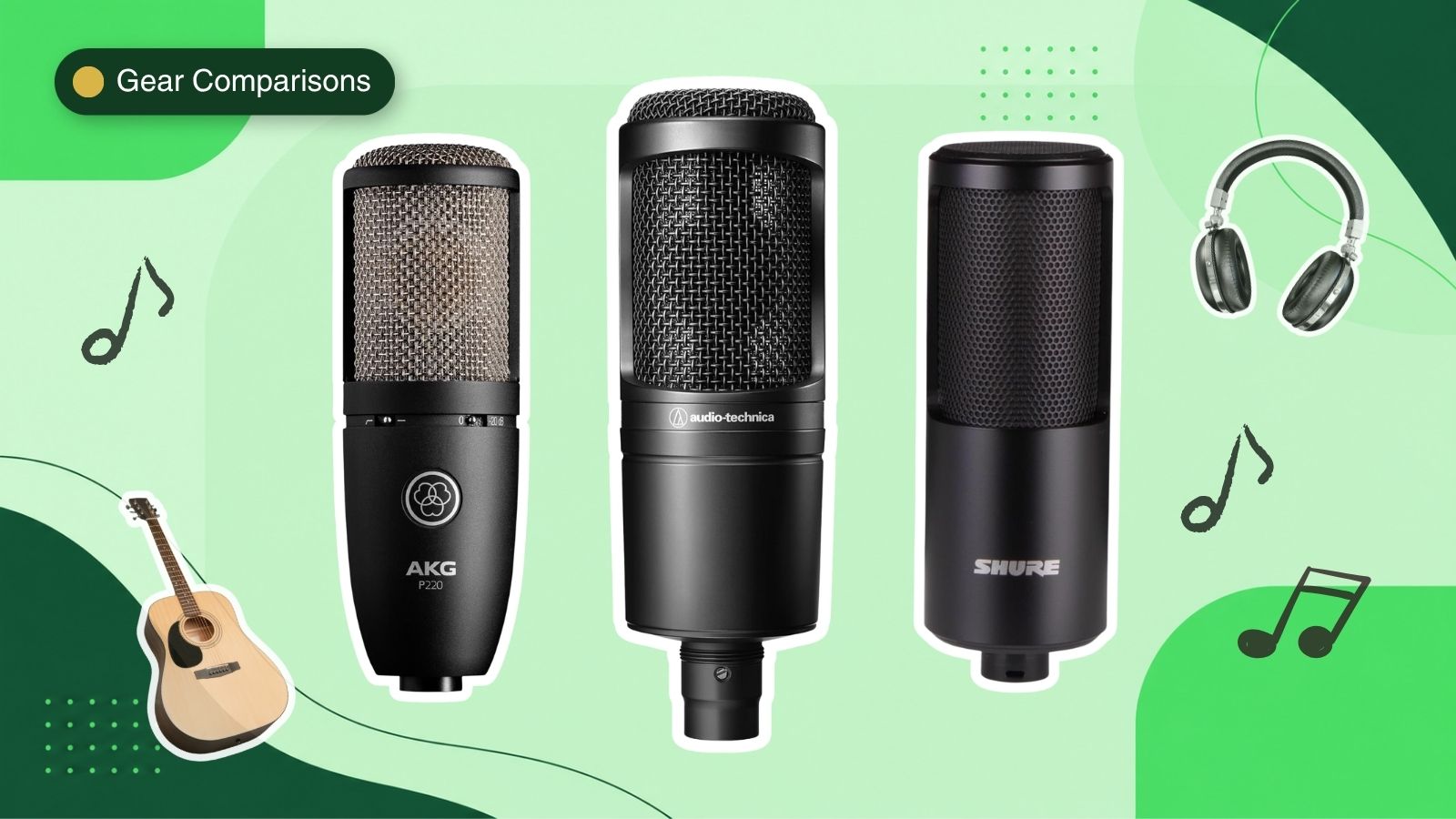
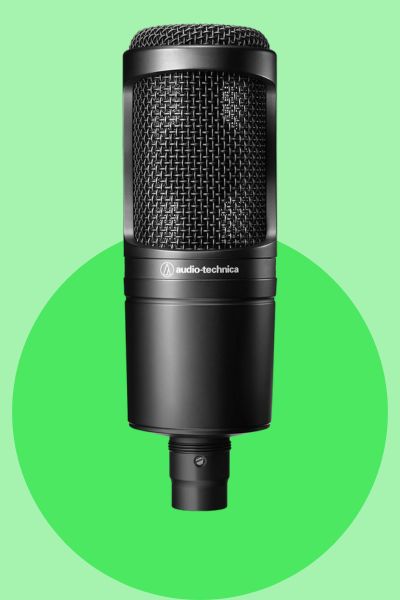
Audio-Technica AT2020
Cardioid, side-address, low noise
- Side-address condenser mic with cardioid pickup.
- Captures warmth and brightness with extended frequency response.
- Low self-noise ideal for untreated rooms.
- Plug-and-play simplicity for home studios.
Why Is It Great?
Professional studio sound quality at a price that won't break the bank for home recordists. It delivers clean, professional sound at a price that's perfect for anyone starting out.
The Pros & Cons of Audio-Technica AT2020
Pros
- Affordable entry into XLR condenser microphones
- Wide 20Hz–20kHz frequency response
- Handles loud sources up to 144dB SPL
- Solid metal construction
- Simple setup with very little to configure
Cons
- No low-cut filter or attenuation pad
- Requires an audio interface with phantom power
- 20dB self-noise is higher than the AKG P220 and Shure SM4
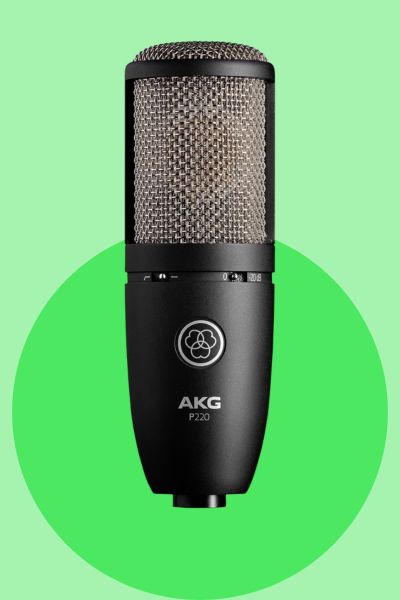
AKG P220
Large diaphragm, 10dB pad, bass roll-off
- Large 1-inch diaphragm with smooth, warm tone.
- Built-in pad and bass roll-off for loud or boomy sources.
- Comes with a shock mount and metal case.
- Great for vocals, instruments and louder sources.
Why Is It Great?
Versatile professional features usually found on much more expensive microphones. It packs high quality features into a mid range mic that handles everything from vocals to amps with ease.
The Pros & Cons of AKG P220
Pros
- test1
- test2Warm and clear large-diaphragm condenser sound
- Switchable bass-cut filter
- -20dB pad for loud sound sources
- Lower self-noise than the AT2020
- Includes spider shock mount and metal case
- Useful for vocals and a wide range of instruments
- test3
Cons
- Heavier than the AT2020
- More expensive than a basic entry-level microphone
- Still requires an XLR audio interface and phantom power
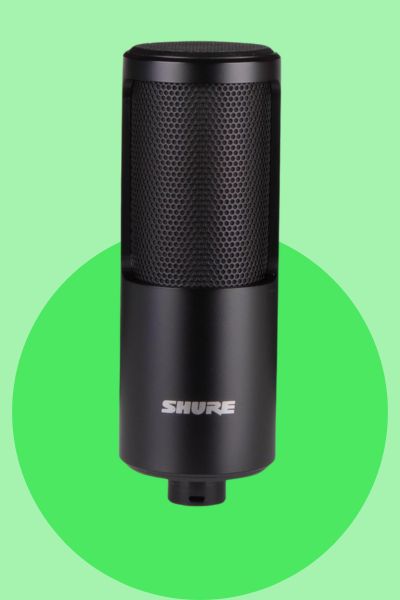
Shure SM4
Flat response, internal shock mount
- Flat response delivers clean, natural sound.
- Built-in shock mount and pop filter.
- ough build for studio or live use.
- Excellent isolation with cardioid pattern.
Why Is It Great?
A studio workhorse designed to deliver clean, accurate recordings with Shure’s signature durability and reliability.
The Pros & Cons of Shure SM4
Pros
- Natural 20Hz–20kHz frequency response
- Lowest self-noise of these three microphones
- Designed to reduce RF interference
- Internal pop filtering
- Handles vocals and loud instruments
- Rugged all-metal construction
Cons
- Most expensive of the three
- No switchable low-cut filter
- No attenuation pad
- External shock mount and pop filter depend on the package purchased
FAQ
Question Is the Audio-Technica AT2020 good for beginner singers?
Yes. The AT2020 is a strong first condenser microphone because it is affordable, simple to use and suitable for both vocals and instruments. You will need an audio interface that can supply 48V phantom power.
Is the AKG P220 better than the Audio-Technica AT2020?
The P220 gives you more recording flexibility because it includes a bass-cut filter and -20dB attenuation pad. The AT2020 costs less and is simpler. For a first microphone the AT2020 makes a lot of sense, while the P220 is the better choice if you expect to record a wider variety of sound sources.
What makes the Shure SM4 good for home recording?
The SM4 has low self-noise, an internal pop filter and interference shielding designed to reduce unwanted RF noise from devices such as phones, laptops and Wi-Fi equipment. That combination addresses several common problems found in home recording spaces.
Do these condenser microphones need phantom power?
Yes. These XLR condenser microphones require phantom power from a compatible audio interface, mixer or microphone preamp. The AT2020 and SM4 specify 48V phantom power while the P220 operates from 44–52V.
Which of these three condenser microphones is best for a singer-songwriter?
For most singer-songwriters I would choose the AKG P220 as the best overall option because it works well for vocals and instruments while giving you a bass-cut filter and attenuation pad for more recording situations. Choose the AT2020 if price is your main concern or the Shure SM4 if you are looking for a more refined home-studio upgrade.
Summary - So, What is the best Condenser Microphone For You?
The right condenser microphone for anybody helps you turn your home recordings into a much more professional sounding final product. Of course, the microphone is not some magical tool - you still need to have the skill in producing the sound that it is recording but it will make those sounds sound much better.
I feel the seven microphones that I picked will give you the best opportunity to sound your best no matter what your price point.
Whether you are just starting your recording journey or looking to seriously level up, one of these condensers will help to capture your voice or instrument with the clarity and character it deserves.
ABOUT THE AUTHOR